| Feature |
South Atlantic |
Typical Competitors |
| Mounting Geometry |
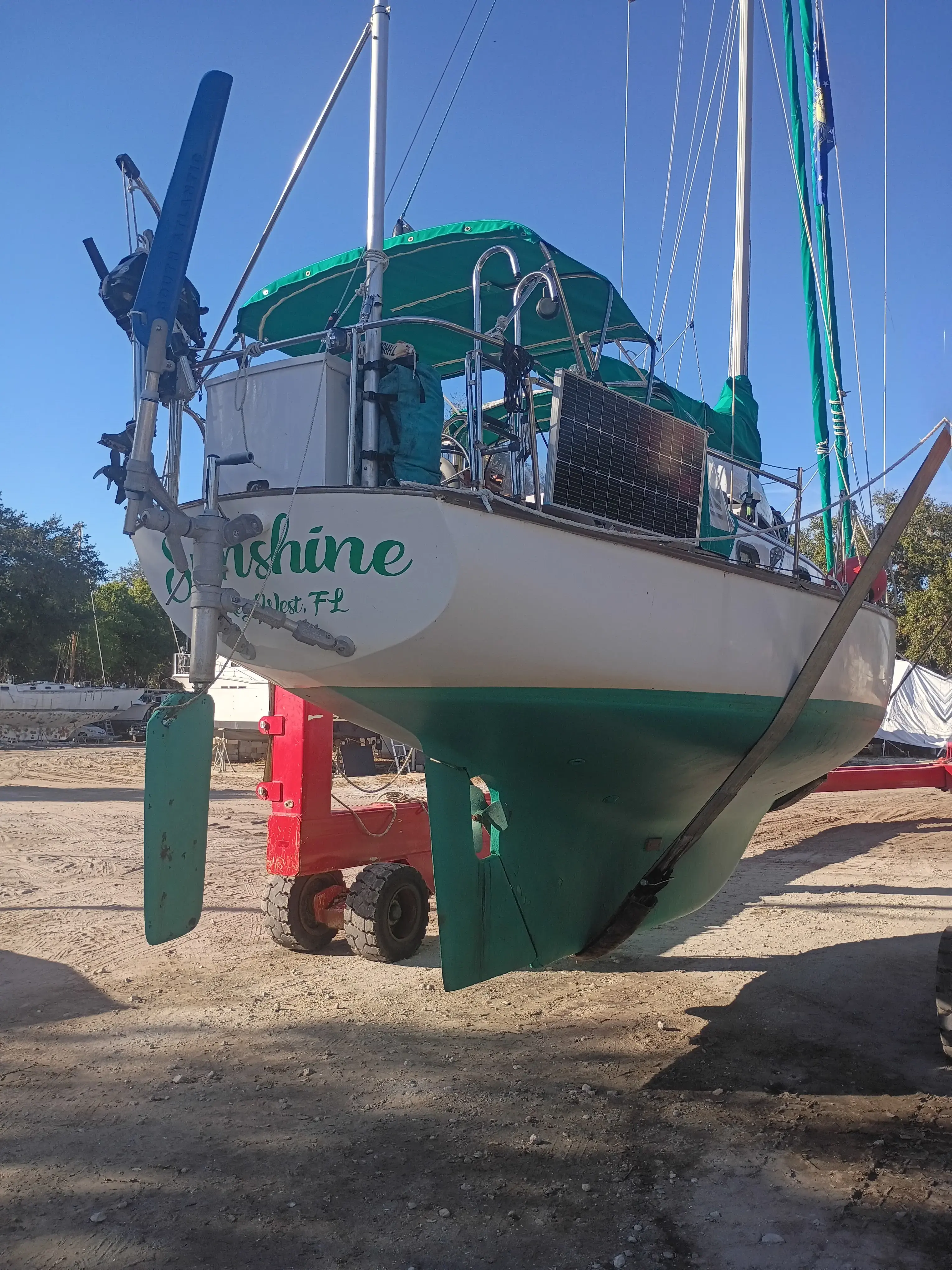
Optimized for centerline/near-centerline placement |
Often pushed far outboard, risking asymmetry |
| Rudder Submersion |
Deep aspect ratio designed for the 1:3 heel rule |
Shallow rudders prone to ventilation on a heel |
| Structural Rigidity |
Heavy-duty, minimal-flex transom brackets |
Extended arms that can flex under heavy load |
| Emergency Capability |
True "Ready-To-Go" independent emergency rudder |
May require complex deployment procedures |
Conclusion
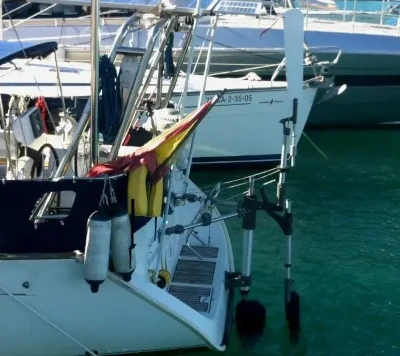
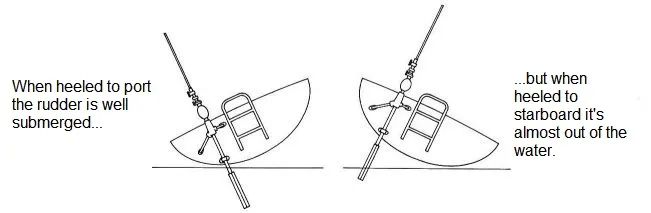
Both the geometry and the images themselves demonstrate measurable physical effects.
An off-center auxiliary rudder installation is not merely an aesthetic choice. It introduces a geometric asymmetry that can reduce steering effectiveness, with the effects becoming more significant as the lateral offset and the vessel's angle of heel increase.
For a system whose entire purpose is to keep a boat on course — day and night, in changing conditions — these effects are not something that should be dismissed or ignored.
There is a substantial and established body of research — in the Netherlands (Delft, one of the leading centers in the field), Australia, and the United States — specifically addressing the relationship between heel angle, rudder immersion, and the steering force a rudder can generate.
This is not an unstudied subject; it has been an active area of sailing yacht hydrodynamics research for decades.
None of these papers was specifically intended to study off-center windvane installations. However, taken together, they independently demonstrate, through different approaches and experimental data, the fundamental physical principle discussed at the beginning:
The immersion of the rudder blade is a key variable governing its ability to generate hydrodynamic force, and vessel heel directly alters that immersion.
If you require any further information or a custom assessment for your vessel, please Contact Us.