The Hydrovane is frequently recommended by its manufacturer for off-center (offset) installations under the argument that it is an independent auxiliary rudder system and that, according to testing by the University of Southampton, it is "completely indifferent" to its positioning as long as it receives "clean water." In fact, the manufacturer claims that more than 75% of its current installations are offset.
However, from a technical and physical standpoint supported by other industry experts in the source material, this recommendation can be considered misleading and false, based on the following points:
-
The Laws of Physics are Universal:
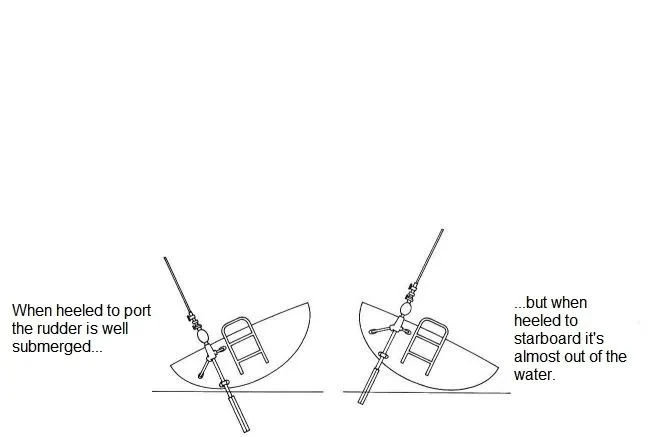
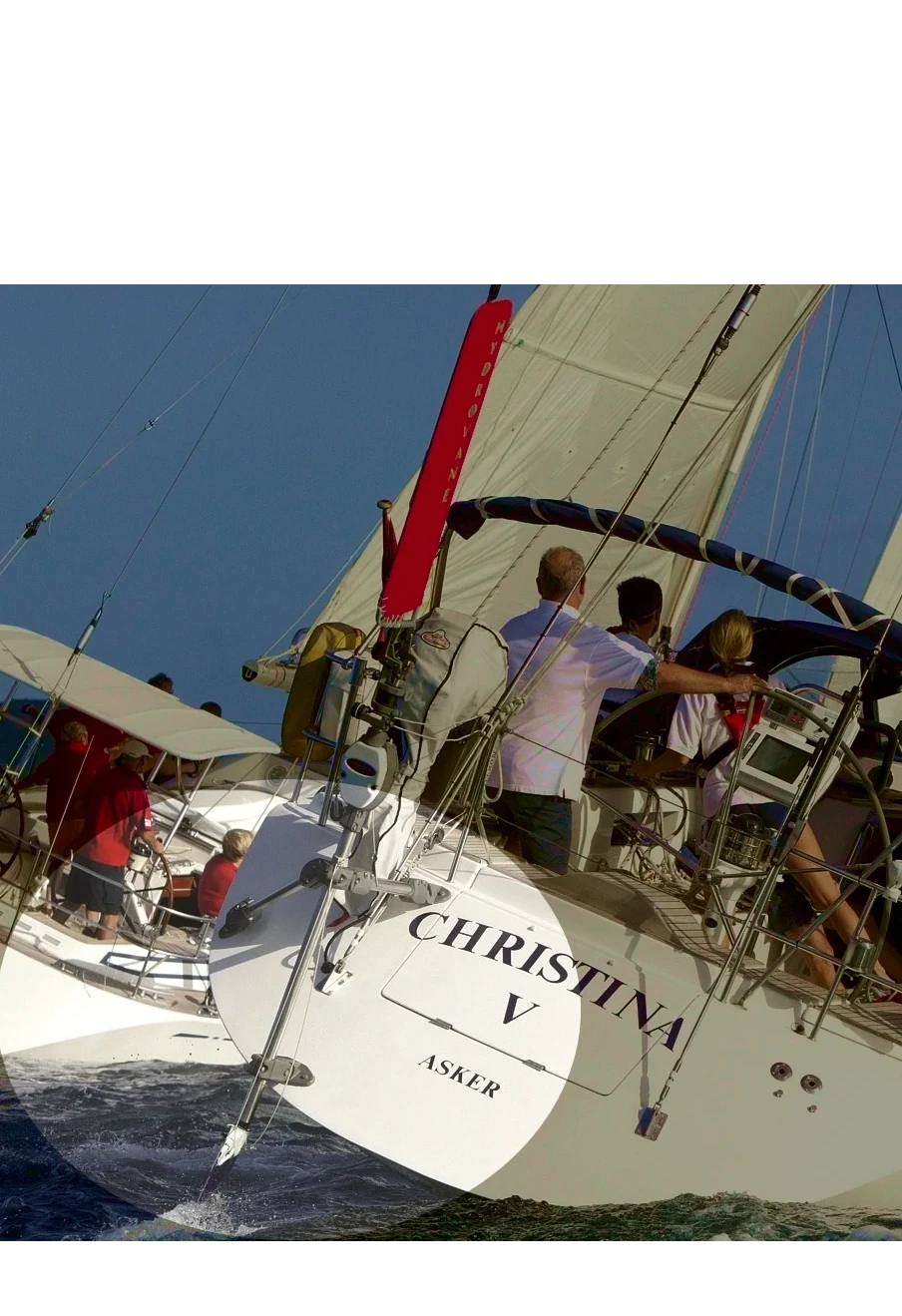
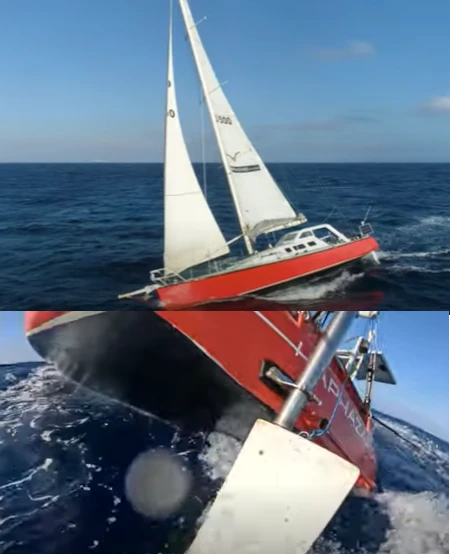
Experts like Peter Förthmann (Windpilot) point out that basic physical principles cannot be ignored for marketing convenience. If a vessel heels away from the side where the equipment is mounted (the windward side), the rudder blade will be partially or completely lifted out of the water.
-
Loss of Effectiveness:
A rudder surface that is not submerged "is as good as not being there."
Paul Elmers from South Atlantic warns that if a rudder is installed on the port side, for example, it will be highly efficient when heeling to port, but useless when heeling to starboard as it lifts out of the water.
-
Strict Off-Center Limits:
While Hydrovane promotes unrestricted offsetting, South Atlantic establishes a maximum limit of approximately 30 cm to prevent critical performance degradation. For their part, the manufacturers of Monitor are even more definitive, labeling off-center mounting as potentially "disastrous" because the blade would plunge too deep on one tack and lift completely out of the water on the other.
-
Laminar Flow Issues:
In the case of multihulls, warnings are issued against installing the gear on one side of a hull (off-center), as this exposes it to turbulent laminar flows that disrupt system operation. The only location with symmetrical flow is the centerline.
Conclusion
Both the geometry and the images themselves demonstrate measurable physical effects.
An off-center auxiliary rudder installation is not merely an aesthetic choice. It introduces a geometric asymmetry that can reduce steering effectiveness, with the effects becoming more significant as the lateral offset and the vessel's angle of heel increase.
For a system whose entire purpose is to keep a boat on course — day and night, in changing conditions — these effects are not something that should be dismissed or ignored.
There is a substantial and established body of research — in the Netherlands (Delft, one of the leading centers in the field), Australia, and the United States — specifically addressing the relationship between heel angle, rudder immersion, and the steering force a rudder can generate.
This is not an unstudied subject; it has been an active area of sailing yacht hydrodynamics research for decades.
None of these papers was specifically intended to study off-center windvane installations. However, taken together, they independently demonstrate, through different approaches and experimental data, the fundamental physical principle discussed at the beginning:
The immersion of the rudder blade is a key variable governing its ability to generate hydrodynamic force, and vessel heel directly alters that immersion.